
Treating Four-Legged Warfighters: Navy Corpsmen Train in Canine Tactical Combat Casualty Care
Published on June 1, 2026
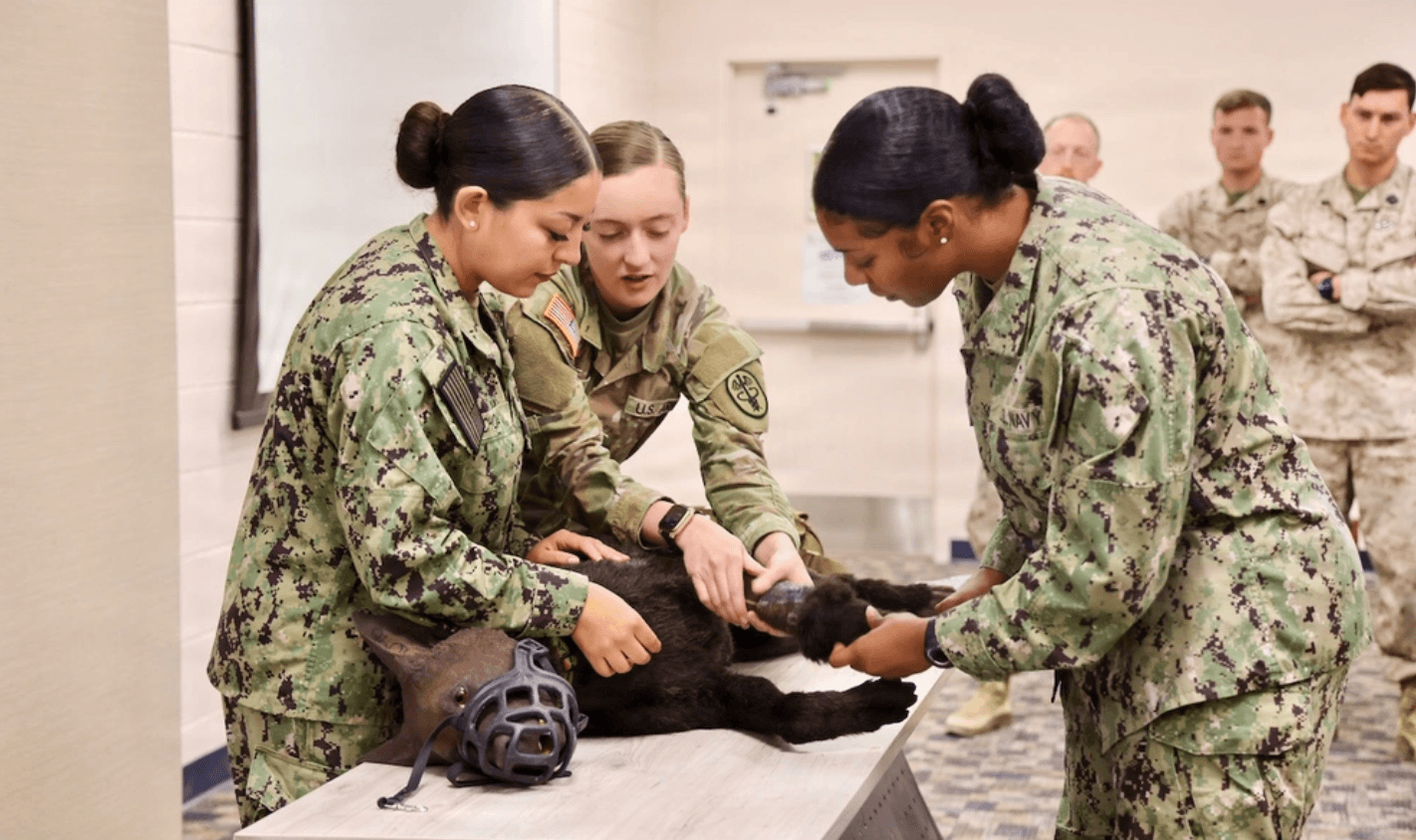
TWENTYNINE PALMS, Calif. — Hospital corpsmen assigned to Navy Medicine Readiness and Training Command (NMRTC) Twentynine Palms strengthened their operational medical capabilities in May 2026 through a Canine Tactical Combat Casualty Care (K9 TCCC) course taught by Army veterinary personnel, providing participants with specialized training designed to help save the lives of military working dogs in combat and field environments.
The course introduced corpsmen to the principles of canine battlefield medicine, including trauma assessment, hemorrhage control, airway management, heat injury recognition, patient stabilization and casualty evacuation considerations for military working dogs. The training marked the first time the course had been broadly offered to corpsmen across the command.
Military working dogs serve alongside service members throughout the Department of War, supporting missions ranging from explosives detection and force protection to law enforcement and patrol operations. Like their human counterparts, military working dogs can suffer injuries during training exercises, operational missions and emergency situations. When those incidents occur in austere environments, corpsmen may be the first medical providers available to render aid.
According to Army Spc. Amelia Knosp, an animal care specialist assigned to the Marine Corps Air Ground Combat Center Twentynine Palms veterinary clinic, providing corpsmen with canine trauma care skills helps bridge a critical gap between injury and definitive veterinary treatment.
“I think that it is very beneficial for hospital corpsmen to train in K9 TCCC because it is a great expansion of their skills and allows them the opportunity to learn something new,” said Knosp. “In a field environment, they will often be the first line of medical care. Animal care specialists and veterinarians are spread thin and are not usually going to be out in the field.”
Knosp explained that military working dog handlers and corpsmen may become the most important resource available to stabilize an injured canine until evacuation to a facility where veterinary personnel can assume care.
“The corpsmen and the dog handlers together will be the most valuable resource to save the canines’ lives until they can be evacuated to a field hospital, where there will more likely be veterinary staff to assist in their care,” she said.
The training itself grew from grassroots interest among NMRTC Twentynine Palms corpsmen seeking opportunities to expand their tactical medicine knowledge. What began as a proposed small-group session quickly evolved into a larger course after additional corpsmen expressed interest in participating.
“The training was arranged due to corpsmen requesting it,” said Knosp. “The original plan was to do a small course for those who were interested. However, more corpsmen found out and expressed increased interest, leading to a full course conducted in three different sessions.”